
 Image 1 of 1
Alexander Technique and Body Mapping with Dr. Shawn L. Copeland Eastern Festival of Music | Summer 2026
What This Program Is
We spend years learning to play. We develop technical precision, musical sensitivity, and the ability to perform under pressure. What conservatory training rarely addresses is how the body organizes itself before and during all of that -- the coordination patterns, the anticipatory tension, the way we load effort before a phrase even begins. Those patterns are not mistakes. They are intelligent adaptations to the demands we have faced. The question is whether they are still serving us, or whether they have begun to limit what we can do in the practice room, the rehearsal hall, and on stage.
Alexander Technique and Body Mapping address that question directly -- not through correction, but through clarity. When we understand how the body actually works, and when we begin to feel the difference between effortful coordination and free coordination, something shifts. Breath deepens. Sound opens. Technique becomes less costly. Injury risk drops.
This is not supplemental work. It is foundational.
Alexander Technique
Developed by F.M. Alexander in the late nineteenth century, the Alexander Technique is a method of somatic education that addresses how habitual patterns of use -- the way we organize head, neck, torso, and limbs in response to demand -- shape everything from breath and tone to stamina and injury. Alexander discovered that the relationship between the head and spine is the organizing center of coordination, and that most of us have learned to interfere with that relationship without knowing it. The Technique teaches us to notice that interference and restore the coordination that was always available.
For musicians, this is immediately practical. The habits that accumulate from years of practicing under pressure -- the bracing, the gripping, the holding of breath before an entrance -- are visible in the Alexander Technique framework and addressable in real time. Not as problems to fix, but as patterns to understand and expand beyond.
Body Mapping
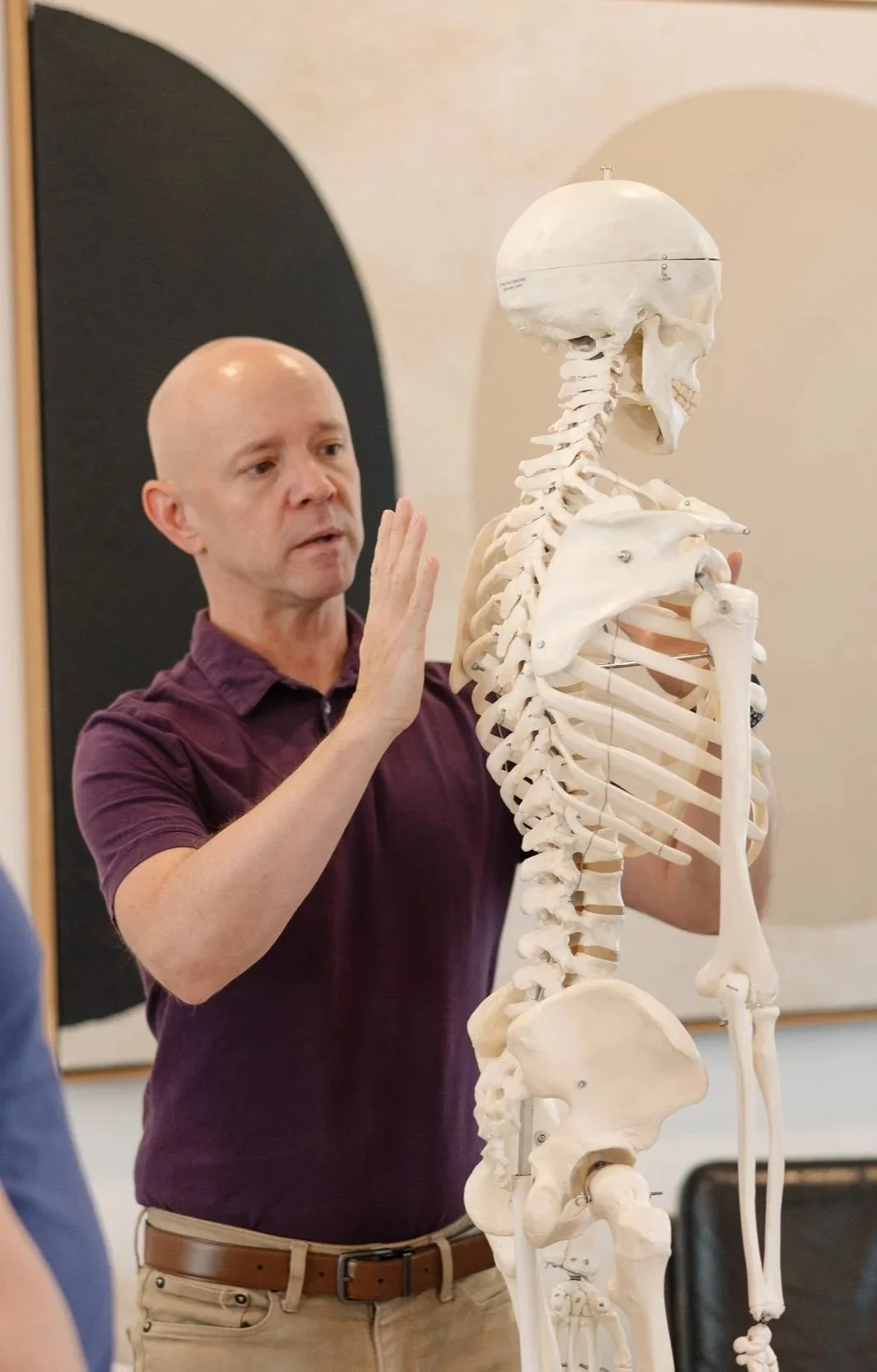
Body Mapping, developed by William and Barbara Conable, begins with a straightforward premise: we move according to our internal map of the body. If the map is inaccurate -- if we believe the shoulder joint is higher than it is, or that breath lives only in the chest, or that the spine ends at the waist -- we organize movement around that inaccuracy. The coordination reflects the map, not the anatomy.
Updating the map updates the movement. Body Mapping gives musicians a precise, anatomically grounded language for understanding how the body coordinates with an instrument. Where does the arm actually begin? Where does the head actually balance? What is the actual structure of the breath? These are not abstract questions. The answers are felt immediately in coordination, tone, and ease.
Why These Two Frameworks Together
Alexander Technique and Body Mapping are complementary at the level of mechanism. Alexander addresses the habits that interfere with coordination. Body Mapping addresses the inaccurate maps that generate those habits in the first place. Together, they give musicians both the awareness to notice what is happening and the anatomical understanding to know what to do differently. Dr. Copeland has spent two decades integrating these frameworks specifically for musicians and has published extensively on their application in studio teaching and performance contexts.
Injury Prevention
A core component of this program is injury prevention education. Performance-related injuries -- in the hands, wrists, shoulders, neck, and embouchure -- most often develop not from single incidents but from accumulated patterns of effortful use. Understanding those patterns before they become injuries is one of the most practical investments a young professional musician can make. This program addresses that directly.
Program Details
Enrollment includes six sessions with Dr. Copeland:
Three 90-minute group classes on Sundays, July 5, 12, and 19. Group sessions work with all enrolled students together, addressing coordination, breath, balance, instrument relationship, and use under the pressures that come with intensive festival rehearsals and performance. The format is participatory -- we work in real time, with instruments, in the actual conditions of the festival week.
Three individual 30-minute private lessons, scheduled across the three festival weeks. Private sessions bring the work directly into contact with each student's instrument, body, and specific patterns.
Enrollment fee: $225, paid directly to mBODYed LLC at registration. Space is limited.
What This Program Is
We spend years learning to play. We develop technical precision, musical sensitivity, and the ability to perform under pressure. What conservatory training rarely addresses is how the body organizes itself before and during all of that -- the coordination patterns, the anticipatory tension, the way we load effort before a phrase even begins. Those patterns are not mistakes. They are intelligent adaptations to the demands we have faced. The question is whether they are still serving us, or whether they have begun to limit what we can do in the practice room, the rehearsal hall, and on stage.
Alexander Technique and Body Mapping address that question directly -- not through correction, but through clarity. When we understand how the body actually works, and when we begin to feel the difference between effortful coordination and free coordination, something shifts. Breath deepens. Sound opens. Technique becomes less costly. Injury risk drops.
This is not supplemental work. It is foundational.
Alexander Technique
Developed by F.M. Alexander in the late nineteenth century, the Alexander Technique is a method of somatic education that addresses how habitual patterns of use -- the way we organize head, neck, torso, and limbs in response to demand -- shape everything from breath and tone to stamina and injury. Alexander discovered that the relationship between the head and spine is the organizing center of coordination, and that most of us have learned to interfere with that relationship without knowing it. The Technique teaches us to notice that interference and restore the coordination that was always available.
For musicians, this is immediately practical. The habits that accumulate from years of practicing under pressure -- the bracing, the gripping, the holding of breath before an entrance -- are visible in the Alexander Technique framework and addressable in real time. Not as problems to fix, but as patterns to understand and expand beyond.
Body Mapping
Body Mapping, developed by William and Barbara Conable, begins with a straightforward premise: we move according to our internal map of the body. If the map is inaccurate -- if we believe the shoulder joint is higher than it is, or that breath lives only in the chest, or that the spine ends at the waist -- we organize movement around that inaccuracy. The coordination reflects the map, not the anatomy.
Updating the map updates the movement. Body Mapping gives musicians a precise, anatomically grounded language for understanding how the body coordinates with an instrument. Where does the arm actually begin? Where does the head actually balance? What is the actual structure of the breath? These are not abstract questions. The answers are felt immediately in coordination, tone, and ease.
Why These Two Frameworks Together
Alexander Technique and Body Mapping are complementary at the level of mechanism. Alexander addresses the habits that interfere with coordination. Body Mapping addresses the inaccurate maps that generate those habits in the first place. Together, they give musicians both the awareness to notice what is happening and the anatomical understanding to know what to do differently. Dr. Copeland has spent two decades integrating these frameworks specifically for musicians and has published extensively on their application in studio teaching and performance contexts.
Injury Prevention
A core component of this program is injury prevention education. Performance-related injuries -- in the hands, wrists, shoulders, neck, and embouchure -- most often develop not from single incidents but from accumulated patterns of effortful use. Understanding those patterns before they become injuries is one of the most practical investments a young professional musician can make. This program addresses that directly.
Program Details
Enrollment includes six sessions with Dr. Copeland:
Three 90-minute group classes on Sundays, July 5, 12, and 19. Group sessions work with all enrolled students together, addressing coordination, breath, balance, instrument relationship, and use under the pressures that come with intensive festival rehearsals and performance. The format is participatory -- we work in real time, with instruments, in the actual conditions of the festival week.
Three individual 30-minute private lessons, scheduled across the three festival weeks. Private sessions bring the work directly into contact with each student's instrument, body, and specific patterns.
Enrollment fee: $225, paid directly to mBODYed LLC at registration. Space is limited.